You might walk onto a lot, see the enclosed trailer that finally solves your hauling problems, and think, “If the payment feels okay, I’m in.” Then you start looking at interest rates, loan terms, and total borrowing costs, and suddenly the idea of financing a $15,000 cargo trailer feels heavier than the trailer itself. A small rate change or an overly long term can add thousands of dollars in interest before you even factor in insurance, tires, or storage.
A better question is, “What am I really signing up for if I finance this enclosed trailer?”
Cargo trailer financing lets qualified buyers spread the purchase cost of an eligible utility trailer over a set loan term rather than paying the full amount up front. Your available rate, term, down payment, and loan amount can depend on your credit profile, the trailer, the amount financed, intended use, and the lender’s guidelines.
Specialty lenders like Southeast Financial look at that broader picture when evaluating financing applications. In this guide, we’ll show you how cargo trailer loans work, what can influence approval and loan terms, and how to structure a payment plan you can still live with a few years from now.
How Cargo Trailer Financing Actually Works for Enclosed Units
For many enclosed cargo trailers, financing options are structured as secured installment loans.
A lender provides the funds for an eligible purchase, and you repay the amount borrowed plus interest over an agreed-upon term.
These are secured loans because the enclosed cargo trailer serves as collateral for the loan in the event a borrower fails to make the required payments. This, on top of the required credit check. Your credit history can significantly impact the interest rates available to you.
That is why the way you choose rate, loan terms, amount financed, and down payment matters so much.
Lenders generally evaluate several pieces of the transaction together:
- Your credit profile and repayment history.
- The enclosed trailer’s age, condition, value, and purchase price.
- The amount you want to finance.
- Your income and existing financial obligations.
- How you intend to use the trailer, whether for commercial work, as a mobile workspace, or for off-road vehicle hauling, and whether that use fits the lender’s guidelines.
- Whether the purchase is through a dealer or a private-party seller.
Expect to share identification, income details, and trailer information such as price, VIN, and seller information. Documentation requirements can vary by lender and individual application. The more complete and consistent that picture is, the easier it is for a lender to evaluate the transaction and potentially offer favorable monthly payment options.
Whether you’re buying a customized trailer for security and weather protection or a utility trailer with a ramp door for easy loading, understanding the buying process, including financing, is key to a smooth ownership transfer.
What It Really Costs to Own a Financed Enclosed Trailer
The monthly payment is only the headline. The real question is what the trailer costs you, on average, for every month you own it, once you stack purchase, operating, carrying, and protection costs together.
That “all-in” number is what your budget has to carry in a normal month, not just in a perfect one.
Here is a simple way to think about the pieces:
| Cost Category | Examples | Frequency |
| Initial purchase and financing | Price, tax, applicable fees, total interest | Upfront + monthly |
| Operating | Registration, insurance, tires, brakes | Ongoing |
| Carrying | Storage, extra fuel from weight, and drag | Ongoing |
| Protection add-ons | Eligible protection products or roadside plans | Optional/case by case |
If, after you add the loan payment, registration, insurance, and a realistic maintenance allowance, your cargo trailer is effectively a $320-a-month commitment and your comfortable number is $250, that is a warning light.
Before you sign, you can still adjust price, term, down payment, or optional add-ons so that owning the trailer fits your budget instead of squeezing it.
How Credit Score, Trailer Age, and Use Shape Your Offer
Lenders rarely decide on your trailer financing based on one number. In practice, they look at three levers together: your credit profile, the cargo trailer itself, and how you plan to use it. These three levers help explain why one person may receive different terms or conditions from another borrower with a similar payment target.
Three Levers Cargo Trailer Lenders Really Care About
- Credit score and history. Your credit score and repayment history can influence available interest rates, down payment requirements, loan terms, and overall eligibility for trailer financing. A solid credit history may unlock better financing options and lower monthly payments.
- Trailer age and condition. Many programs place limits on trailer age, condition, and other collateral characteristics. Very old, rough, or unusually valued units, such as custom trailers or modified car haulers, may have fewer financing options.
- Intended use. How you plan to use the enclosed cargo trailer can affect whether it fits a lender’s program guidelines, especially if it involves commercial work, mobile workspaces, or off-road vehicle hauling. Ensuring clear and accurate information about intended use, whether it’s for contractors or transporting ATVs and mowers, is crucial.
You cannot rebuild your entire credit profile overnight, but you can pick a trailer that fits lender guidelines, put solid documentation behind your income, and adjust down payment or term expectations as needed to facilitate a smooth ownership transfer.
Bank, Dealer, or Specialty Lender: Which Fits Your Cargo Trailer Loan?
When you are comparing cargo trailer financing, you are usually choosing between banks or credit unions, dealer-arranged financing, and specialty lenders. Each can work; the trick is understanding where each one helps you and how the financing is structured.
Pros and Cons of Each Financing Channel
- Banks and credit unions. These institutions may offer competitive rates to qualified borrowers, but trailer-age limits, private-party policies, documentation requirements, and eligibility standards can vary.
- Dealer-arranged financing. This offers a convenient one-stop process at the lot, but you should still review the rate, term, amount financed, optional add-ons, and total borrowing cost before accepting an offer.
- Specialty lenders. These lenders focus on particular types of collateral and may have programs designed around transactions or borrower profiles that do not fit every traditional lending program. Eligibility still depends on the lender’s guidelines and the individual application.
Whatever path you choose, compare offers the same way: how much you are actually borrowing, how long you will be paying, what rate and fees you are accepting, and what each contract says about prepayment and add-ons.
If you would rather talk through the numbers than compare them on your own, a specialist can walk you through those trade-offs in plain language.
Personal vs. Commercial Use: Why It Matters for Cargo Trailer Financing
Two enclosed cargo trailers can look almost identical and still fall into different financing categories depending on how they will be used. A trailer purchased to haul motorcycles, ATVs, recreational gear, or personal belongings may be evaluated differently from one purchased primarily to carry tools, equipment, or inventory for a business.
That distinction matters because lenders set their own rules around eligible uses. Some financing programs are designed for personal or recreational purchases, while others focus on business or commercial equipment. Being clear about how you plan to use the trailer helps determine which financing programs may actually fit the transaction.
Southeast Financial focuses on eligible recreational-use financing. If you are considering an enclosed cargo trailer for recreational or utilitarian purposes, confirming that the trailer and intended use fit current program guidelines before you commit to the purchase can help avoid surprises later in the financing process.
Managing Depreciation, Negative Equity, and Worst-Case Scenarios
One of the biggest long-term risks in cargo trailer financing is negative equity—owing more than the trailer is worth.
Enclosed trailers can depreciate, and your loan balance does not necessarily decline at the same pace. If you finance most or all of the purchase over a long term, it is possible to owe $10,000 on a trailer you could only sell for $7,500. That $2,500 gap has to come from somewhere if you need to exit early.
You can lower that risk by:
- Choosing the shortest term your monthly budget can comfortably support.
- Putting meaningful money down instead of rolling everything into the loan.
- Prioritizing solid construction and good resale value over cosmetic upgrades.
- Keeping a modest emergency cushion so that an unexpected expense does not immediately put the payment at risk.
Optional protection products may be available for some eligible loans or trailers, but availability and coverage vary. If you are considering one, review what it covers, what it excludes, and how much it adds to the total amount you finance.
If payment trouble ever looks likely, review your loan agreement and contact your loan servicer as early as possible. Available options depend on the lender, loan agreement, and individual circumstances.
Right-Sizing Your Trailer and Payment for Your Budget
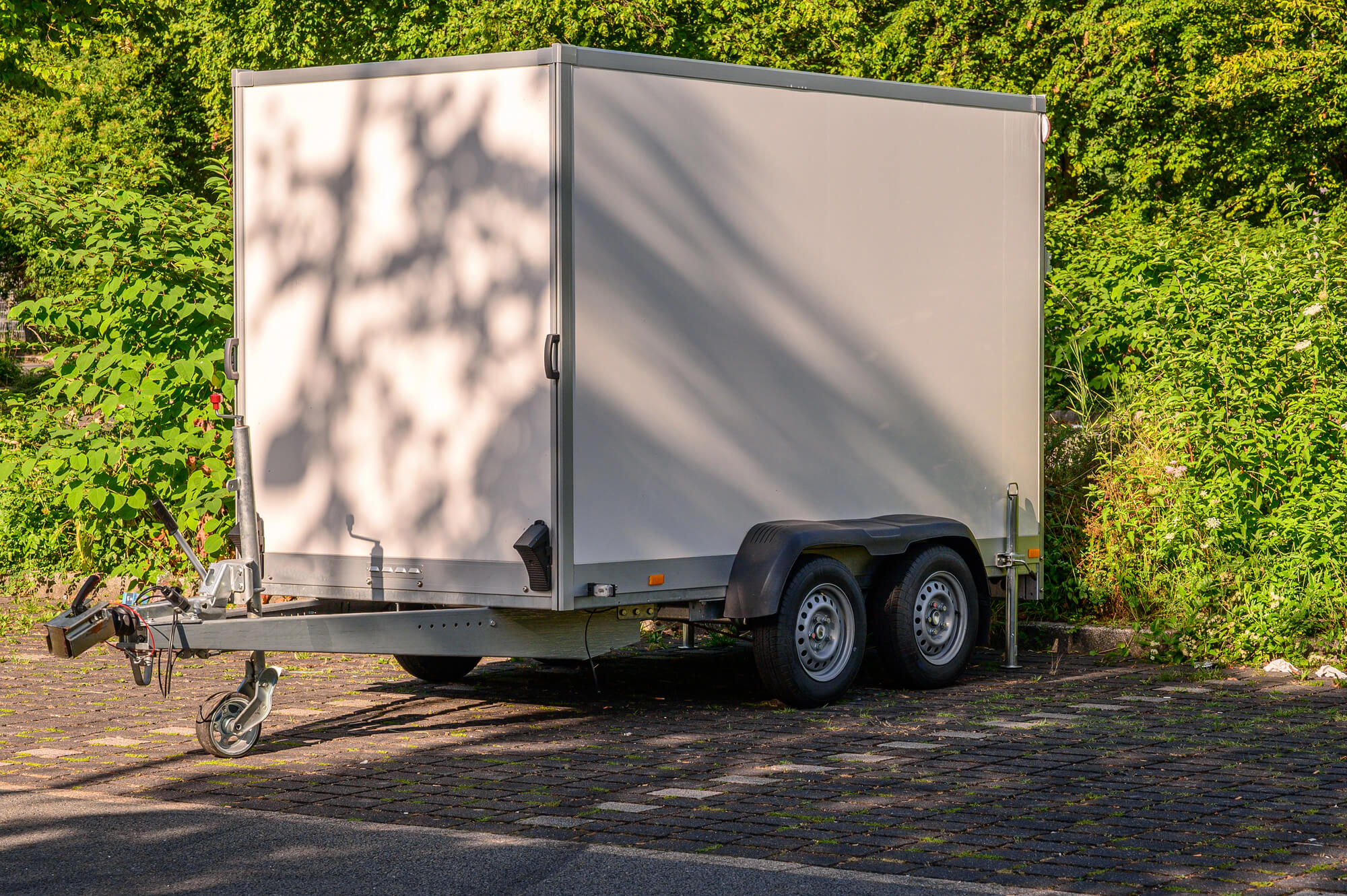
Choosing the right cargo trailer financing options starts before the application process, by understanding both your trailer’s needs and the limits of your budget. Whether for personal use or hauling ATVs, it’s important to evaluate aspects like whether renting, buying a less expensive unit, or even considering a rent-to-own option might suit you better. Some rent-to-own programs advertise no credit check and can offer faster access to trailers than traditional financing, and flexible end-of-term options let customers choose their next steps, though the total cost over time is worth comparing against a standard loan.
Trailer type matters too. Cargo trailers range from six to twenty-four feet long, utility trailers typically measure eight to twenty-two feet in length, and flatbed trailers usually measure thirty to forty-eight feet long. Dump trailers can transport soil, rock, and mulch efficiently, while gooseneck trailers require at least a three-quarter ton truck to pull, so your tow vehicle is part of the budget conversation as well.
Here’s a straightforward strategy to balance these priorities:
- Establish your maximum all-in monthly payments. On top of the interest rate and down payment, include the cost of insurance, registration, fuel, and basic trailer maintenance.
- Work backward from your monthly payment cap to determine a trailer price and loan terms that will accommodate that number at a realistic interest rate. Avoid being lured by exceptionally low advertised interest rates that may not apply to your credit history or current market conditions. APR incorporates financing costs and is important for comparing loan offers, and interest rates can be fixed for the duration of the loan, which makes your payment easier to plan around.
- Focus on essential features. Ensure your cargo trailer has the necessary storage and payload capacity for your intended use, such as adequate axle packages for load management or decent exterior construction for weather protection. Leave non-essential upgrades for later if they strain your budget.
Remember, the goal isn’t to qualify for the maximum amount possible. Instead, it’s to obtain trailer financing with manageable payments and total costs. A larger down payment can reduce the amount financed and improve loan rates, and it’s smart to ask whether lenders may impose early payoff penalties before you sign. Specialized lenders like Southeast Financial can assist by explaining how your trailer type, intended use, and chosen financing options align with current program guidelines.
How to Prepare a Strong Cargo Trailer Application
The same enclosed trailer can look like an easy approval or a stretch depending on how cleanly you present the file. A little preparation before you apply can help lenders evaluate the strengths in your situation and may make the process smoother. You can apply for trailer financing with a co-signer if needed, which can strengthen an application when credit or income is borderline.
- Step 1: Get Your Numbers and Documents Ready: Have a realistic budget range, recent pay stubs or other income records when required, and the basics on the trailer: year, make, model, VIN, price, and whether it is a dealer or private-party sale. The lender may request additional documentation depending on the borrower, trailer, and transaction.
- Step 2: Be Clear About How You Will Use the Trailer: Describe how you plan to use the trailer accurately.
- Step 3: Choose a Trailer That Fits Lender Guidelines: Look for enclosed trailers within the lender’s age, condition, value, and other collateral requirements instead of chasing the absolute cheapest unit on the lot. A clean, well-kept trailer that matches program rules may be easier to finance and more likely to hold its value if you ever need to sell or trade.
Southeast Financial can also help you understand whether an enclosed trailer and its intended recreational use fit current program requirements before you move forward with a purchase.
From Considering Cargo Trailer Financing to Moving Forward With Southeast Financial
Once you understand how rate, term, trailer age, intended use, and total ownership cost fit together, cargo trailer financing becomes less about finding a payment that looks good and more about choosing a financing structure that makes sense for you.
That is where working with a specialty lender can help.
Southeast Financial focuses on recreational and specialty financing, giving borrowers access to a team familiar with the types of collateral, transactions, and financing questions that may not fit neatly into a traditional lending process. Specialty equipment and trailer finance companies can often provide quick loan approvals, and many trailer loans are approved in hours, not days, while dealership financing can sometimes yield same-day approvals and dealer-sponsored financing may offer promotional rates for qualified buyers. Credit union loans generally feature lower interest rates and fewer hidden fees, so they’re worth comparing alongside any other option. Whether you are purchasing through a dealer or exploring an eligible private-party transaction, the goal is to help you understand the available path and the terms before you commit.
When you are ready, you can apply online with Southeast Financial to see whether your enclosed trailer, intended use, and financing needs fit current program guidelines.

Rate does not apply to refinancing.
Please call for a refi quote: 866.900.8949