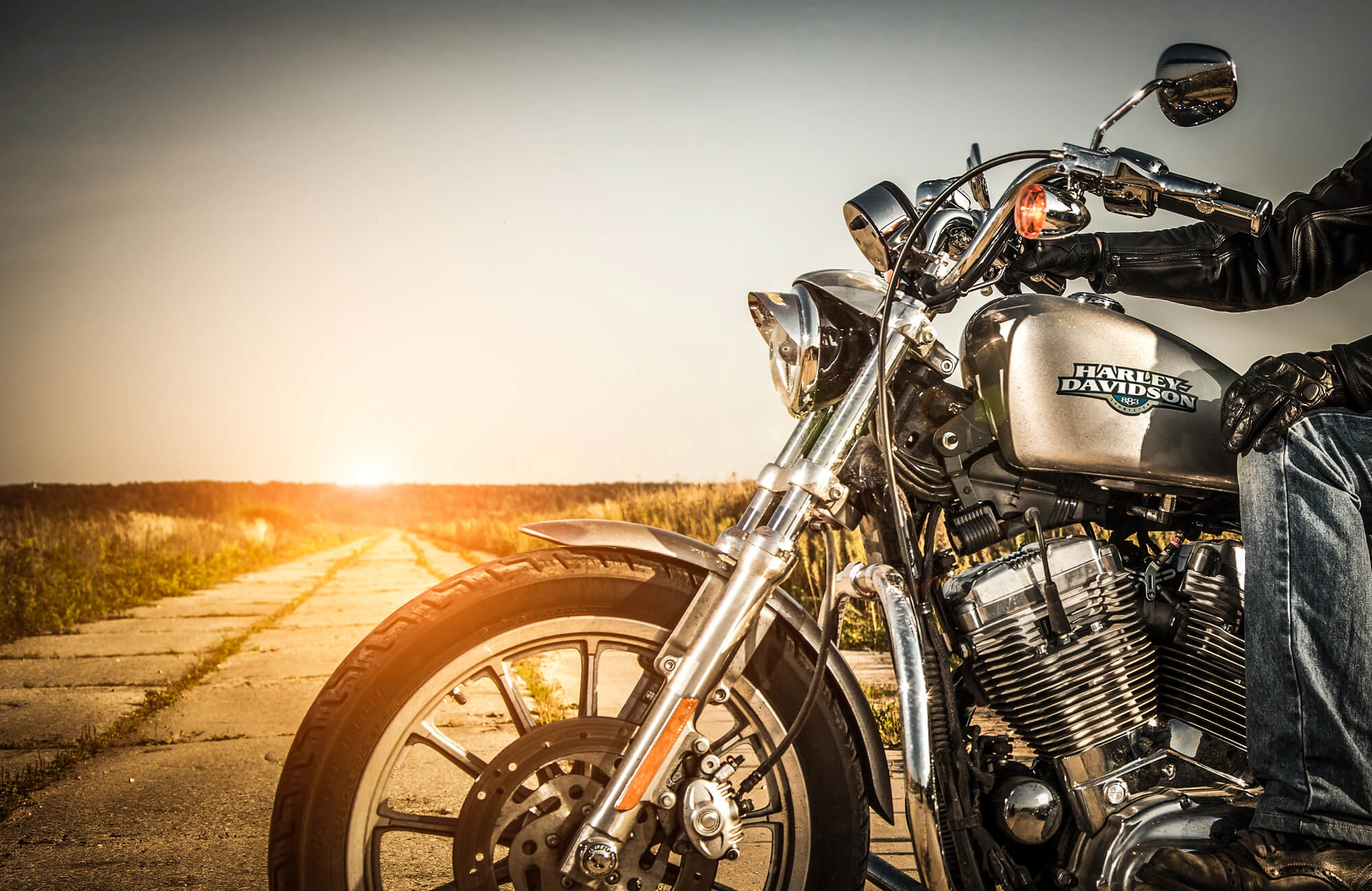
You’ve probably stood in front of a Harley or big touring bike, imagining life on the open road, only to run the payment in your head and then back away because the numbers felt fuzzy.
You might know how car loans work, you’ve heard that motorcycle rates are “higher,” and you’ve seen offers that seem great until you start thinking about insurance, gear, and the rest of your budget.
We’re here to clear things up and hopefully bring your dreams of touring bikes closer to reality with our guide to Harley or touring motorcycle loans.
While this guide is general information, and not personal financial advice, the goal is to show you how Harley-Davidsons and touring-bike loans really work, how your credit score and down payment change the deal, how dealer, bank, and specialist offers compare, and how to walk into any showroom with a clear budget and a plan, along the way, you’ll see where a recreational lender like Southeast Financial can help you build a motorcycle loan around your life instead of forcing your life around the payment.
How Different Is Touring Motorcycle Financing From a Car Loan?
Financing Harleys or big touring bikes follows the same basic pattern as a car loan: a fixed-rate, fixed-term installment loan secured by the bike’s title, with equal monthly payments until it’s paid off.
The difference is in how lenders view the risk. A large motorcycle is usually treated as a “want” instead of a “need,” so underwriting may be tighter, and the collateral gets more scrutiny than most riders expect.
Overall, financing for touring motorcycles comes with unique considerations due to:
- Higher depreciation curves
- Increased insurance risk
- Seasonal usage patterns
- Greater credit sensitivity in some lending programs
Depreciation and collateral value matter in particular.
Also, deep custom work may matter a lot to you, but lenders and insurers usually value the bike closer to stock.
Most programs, including Southeast Financial, also require primary commercial or gig use and unit-age rules that keep the collateral inside each partner bank’s comfort zone.
Day to day, though, the approval still comes down to familiar pieces: credit history, income, existing debts, and clean documentation.
If you walk in with ID, proof of income and address, and an insurance plan in mind, the process will feel a lot like an auto loan, just with motorcycle-specific guardrails around use, age, and value.
What Will This Harley Touring Rig Really Cost Each Month?
The payment you see on a Harley loan is driven far more by APR, loan term, and down payment than by the bike’s price tag.
The same $20,000–$30,000 touring bike can produce very different monthly payment numbers depending on how you structure the loan. Shorter terms increase the payment but cut total interest and debt time; longer terms do the opposite.
Beyond the loan itself, there’s a “shadow payment” most riders underestimate. When you plan your Harley financing, build in:
- Full-coverage motorcycle insurance is usually higher than a typical car policy.
- A realistic first-year gear list: helmet, jacket, boots, gloves, and luggage.
- Registration, taxes, and any dealer documentation or prep fees.
- Optional coverage like GAP or an extended service contract.
Those costs don’t sit in the loan contract, but they land in your checking account the same way. A bike payment that looks comfortable on paper can feel tight once real-world costs hit.
Here’s a simplified example for a $25,000 loan, using rounded numbers for illustration only:
| Scenario | Approx. Monthly Payment | Approx. Total Interest |
| 6.99% APR for 60 months | About $495 | About $4,700 |
| 9.99% APR for 72 months | About $465 | About $8,300 |
| 9.99% APR for 84 months | About $415 | About $9,800 |
That last line is the classic trade: saving roughly $80 a month by paying roughly twice as much in interest. If you’d rather not run these scenarios alone, you can work with a lender that sees Harley-Davidsons and touring-bike files every day and can show you, in plain numbers, how rate, term, and insurance land in your budget before you sign anything.
How Your Credit Score Shapes a Harley Loan Offer
Your credit profile often has more impact on your Harley loan than the bike you choose.
Most motorcycle lenders group riders into broad bands: poor, fair, good, excellent, and each band comes with its own range of APRs and term options.
“Good” credit scores often start in the high 600s into the 700s, while “fair” tends to sit in the low- to mid-600s, but each lender draws lines differently.
Underwriters don’t just glance at one three-digit score.
When they review a Harley-Davidson bike, or any other touring-bike application, they focus on:
- Payment history: Recent late payments are serious red flags.
- Credit utilization: Maxed-out cards suggest strain, even with a decent score.
- Debt-to-income ratio (DTI): High existing payments can force a shorter term or bigger down payment.
- Profile stability: Time in your job and at your address helps with bigger, longer loans.
A rider in a “good” band might see offers in the high single digits to low teens, while a “fair” profile could see mid-teens or higher. On a five- to seven-year loan for $20,000–$30,000, that gap can add thousands of dollars in interest and can also limit which partner banks a specialist lender can place your file with.
Small moves that can improve your offer
You don’t have to rebuild your credit from scratch to move the needle. In the months before you apply, small, targeted steps can help:
- Bring any past-due accounts current so nothing is reporting as late.
- Pay down high-utilization cards, even if it’s just knocking them below 50% or 30%.
- Avoid taking on new loans or cards that push your DTI higher.
- Pull all three credit reports, check for obvious errors, and dispute what’s clearly wrong.
When you’re ready to shop, try to keep your rate checks inside a tight window, often a couple of weeks, so multiple motorcycle-loan inquiries are more likely to be treated as one shopping event in many scoring models.
Even a small move from the middle of “fair” into the low end of “good” can unlock better interest rates and more flexible terms. If this loan will sit in your budget for years, it’s worth talking through your plan with a qualified financial professional so you’re confident the payment fits alongside retirement, housing, and other goals.

Should You Finance Through a Dealer, Bank, or Specialist Lender?
Once you know roughly what you can afford and where your credit stands, the next decision is where the loan should live. Dealer-arranged financing, direct bank or credit-union loans, and specialist recreational-vehicle lenders can all put a Harley in your garage, but they do it with different balances of speed, flexibility, and cost.
Comparing at least two paths before you commit keeps you out of guesswork and sales-floor pressure.
Dealer-arranged financing
Dealer-arranged financing is built for speed, but not necessarily affordability. You pick the bike, fill out one application, and the finance office pushes it through their lender network.
In many cases, you can be approved, sign, and ride the same day.
The trade-offs are that:
- Dealers can add markup to base interest rates offered by a lender.
- Extras like GAP, service plans, and accessories may be quietly rolled into the amount financed.
- You may not see programs that would fit better at your credit score band or for your exact unit.
If you have strong credit and you’ve already seen outside quotes, a dealer-arranged loan can still be a reasonable choice, although a specialist like Southeast Financial can also offer quick quotes, pre-approvals, and competitive interest rates and loan terms.
Direct bank or credit union loans
Your own bank or a local credit union is a solid benchmark. They often offer clear, fixed-rate installment loans and may reward existing relationships. At the same time, they tend to have tighter rules on:
- Maximum age and mileage for the bike.
- Minimum loan size.
- Whether they’ll touch private-party or out-of-state deals.
A short prequalification call or online check usually tells you quickly whether they’ll even consider the specific Harley or touring rig you have in mind, and on what basic terms.
Specialist motorcycle and RV lenders
Specialist lenders focused on motorcycles, RVs, and other recreational vehicles can offer a wider range of solutions for those in the gray areas: older Harleys, custom touring rigs, mid-score riders, private-party purchases, and non-standard collateral combinations.
They understand the asset and maintain relationships with partner banks that are comfortable in this space.
A lender like Southeast Financial, for example, works every day with riders and banks across the nation on Harley-Davidson and touring motorcycle loans.
That kind of focus often means more options for older units, non-dealer sales, and structured terms that fit recreational-use-only underwriting.
Walking into a showroom with at least one of these outside approvals in hand gives you real leverage; you’re comparing numbers, not just reacting to whatever appears on the dealer’s screen.
Cash, Down Payment, and Loan Structure: Keeping Your Harley Deal Safer
Your down payment and term length are the two levers you control most directly, and they do far more than just move the monthly number.
On a Harley-style touring bike, aim for a conservative, rider-friendly target: enough to keep you out of an upside-down position if you need to sell or the bike is totaled, without requiring years of saving before you ride.
A loan that looks safe on paper usually has three traits: a meaningful down payment, a term that doesn’t stretch your financial life to the limit, and a structure that lets you prepay without penalty. If you can check those boxes before you fall in love with one specific bike, you’re already ahead of most buyers in the showroom.
Why your down payment matters
A stronger down payment does three important jobs at once:
- Lowers the amount you finance on day one.
- Improves loan-to-value (what you owe versus what the bike is worth).
- Reduces the risk of being upside-down if the bike is totaled or sold early.
On a $22,000 bike, 10% down means financing about $19,800; 20% down means about $17,600. On a five-year term at the same APR, that difference can easily shave $40–$60 off the monthly payment and cut several hundred dollars from total interest. It also gives you more flexibility if you ever want to trade, sell, or refinance into a different structure later.
Term length and total cost
Longer term, 72 or 84 months, can make a big touring rig look “affordable” on a month-to-month basis, but they keep you in debt longer and maximize total interest paid. A safer path is to:
- Decide on a maximum payment that still leaves room for insurance, fuel, maintenance, and gear.
- See which term hits that number at a realistic APR for your credit.
- Resist stretching farther just to squeeze in extra accessories or a higher trim level.
Where possible, look for simple-interest, fixed-rate loans with no prepayment penalties.
That structure, common in many recreational-loan programs from specialist lenders, gives you an escape route: if your cash flow improves later, you can send extra principal, shorten the effective term, and reduce total interest without renegotiating the contract.
Confirm “no prepayment penalty” in the actual loan documents, not just in conversation.
How Your Harley Choice, Age, and Custom Work Affect Financing
The bike you choose quietly shapes who will finance it, at what rate, and on what terms. A nearly new touring model from a major brand lives in one underwriting box; a ten-year-old Road Glide with custom paint and audio lives in another. Knowing how lenders see those differences helps you avoid falling in love with a Harley that’s extremely hard or expensive to finance.
Your favorite customizations may help you love the bike, but they rarely move it into a safer bucket on the lender’s side.
Age, mileage, and lender rules
Most motorcycle and recreational-vehicle lenders set guardrails around:
- The maximum age for used bikes they’ll finance.
- Minimum loan size below which they won’t write a contract.
- Mileage guidelines, especially for heavyweight touring rigs.
A very inexpensive, older bike can be surprisingly hard to finance simply because it falls under a lender’s minimum or outside its age rules.
Also, many programs, including Southeast Financial’s, also enforce recreational use only: no primary commercial or delivery use. If you’re planning cross-country touring plus occasional work use, be clear about that upfront so the structure matches the actual use.
Custom work and private-party sales
Custom paint, audio, wheels, and chrome may justify a higher asking price in your mind, but lenders and insurers typically value them at pennies on the dollar. If you roll too much of that into the finance amount, you increase the risk of being upside-down and limit the pool of lenders willing to touch the deal.
Private-party sales bring their own checklist:
- Clear title
- Payoff verification if there’s an existing lien
- Bill of sale
- ID on both sides
- Sometimes, third-party inspections or escrow-style funding
Many specialist lenders handle these Harley and touring-bike deals every day, but they do take more time and documentation than a clean franchised-dealer sale.
What Harley Financing Mistakes Do Riders Make Most Often?
Most Harley-Davidson financing headaches don’t come from one huge bad decision; they come from a stack of small, avoidable choices that only show their teeth a year or two down the road.
Seeing the common mistakes now helps you build a touring-bike loan that still feels solid long after the showroom buzz wears off.
Some of the big, repeatable mistakes look like this:
- Chasing the lowest possible payment by stretching the term far past the bike’s likely ownership window.
- Putting little or nothing down and ending up upside-down the moment the bike leaves the lot.
- Thinking only about the loan payment and forgetting insurance, gear, maintenance, and taxes.
- Accepting the first dealer-arranged offer without checking a bank, credit union, or specialist lender.
- Ignoring whether the loan is simple-interest and whether there’s a prepayment penalty.
A better path is to match the loan structure to your real plans, so if life happens, a job change, a move, a family shift, you still have options.
A Step-by-Step Plan To Get Approved for the Right Harley Loan
A little structure turns Harley or touring motorcycle loans from guesswork into a clean, repeatable process. Think of it as building the kind of file a careful underwriter likes to see: realistic budget, sensible unit choice, accurate paperwork, and a set of offers you can compare without pressure. If you work this plan before you sign anything, you’re far less likely to be surprised by a payment or a lender rule later.
Simple prep checklist
Step 1: Get clear on your numbers
Pull your credit reports and scores, then pick a realistic price range and maximum monthly payment that still leaves room for insurance, fuel, maintenance, and gear. Use a motorcycle loan calculator to test a few combinations of APR, term, and down payment so you know what “comfortable” really looks like for you.
Step 2: Gather your documentation
Before you apply for a motorcycle loan, line up recent pay stubs, bank statements, a government-issued ID, proof of address, and at least one full-coverage insurance quote. Having these ready makes applications faster and more accurate, and it reduces the risk of delays when an underwriter or dealer asks for something on a tight timeline.
Step 3: Shop smart within a short window
When you’re ready, apply within a week or two to a small set of strong-fit options: your bank or credit union, or a specialist recreational lender such as Southeast Financial. Keeping applications inside a short window helps many scoring models treat them as rate shopping instead of scattered new-debt grabs.
Step 4: Compare offers side by side
For each approval, write down the APR, term, amount financed, required down payment, fees, and whether there’s any prepayment penalty. Confirm whether the structure is a simple-interest, fixed-rate loan, and pay close attention to how the payment feels next to your other monthly obligations, not just in isolation.
Step 5: Sanity-check before you sign
Once you’ve picked a structure, run one last pass against your budget. If the number feels tight, don’t be afraid to choose a less expensive bike, increase your down payment, or delay the purchase until the payment fits cleanly. The goal isn’t just getting approved for a Harley loan; it’s keeping that loan from boxing in the rest of your financial life.
When You’re Ready for a Clear Harley Financing Plan
If you’ve read this far, you’re not just daydreaming about a Harley, you’re trying to make a smart decision about how it fits into your life. You understand now that the right loan is more than a low number on a screen; it’s a structure that respects your budget, the way you’ll actually use the bike, and the other goals you’re still aiming at, whether you’re looking at new Harley Davidson motorcycles on a dealer’s floor or a pre-owned Street Glide or Fat Boy you found through a private seller.
When you’re ready to see how your credit, income, and target bike translate into a real touring-bike payment, it can help to put your file in front of a team that looks at recreational loans all day instead of once in a while. That makes it easier to explore financing options before you buy, rather than waiting until you’re already at the Harley dealer or dealership finance desk and under pressure to take whatever is presented. Getting the numbers right up front can save you money and hassle, and it gives you access to better information when comparing the cost of the bike against ongoing repairs, performance upgrades, and everything else that comes with ownership. Additionally, knowing your payment range ahead of time makes it much easier to find the right bike at the right price.
Southeast Financial has specialized in nationwide recreational lending for more than two decades, working with riders and partner banks across the country on Harleys, big touring rigs, and other recreational vehicles, boats, or trailers that still need to be financed wisely.
Your next step is simple: start a secure conversation or application about the specific bike and budget you have in mind, and let a lending team that understands both motorcycles and math help you choose a Harley loan structure that keeps your ride—and the rest of your finances—on solid ground.

Rate does not apply to refinancing.
Please call for a refi quote: 866.900.8949