Choosing between a fifth wheel camper and a motorhome is one of the biggest decisions prospective RV owners face. Both offer the freedom to travel, explore new destinations, and enjoy the RV lifestyle, but they deliver very different ownership experiences.
Some RVers prefer the convenience of a self-contained motorhome that combines transportation and living space into one vehicle. Others appreciate the flexibility, value, and spacious floor plans offered by Fifth Wheel RVs. Neither option is universally better: the right choice depends on your budget, travel habits, towing preferences, and long-term goals.
Before making such a significant purchase, it’s important to understand how fifth wheels and motorhomes differ in terms of living space, amenities, towing requirements, storage, maintenance, financing, and overall cost of ownership.
In this buyer’s guide, we’ll compare 5th wheel vs motorhomes, explain the strengths of each, discuss financing considerations, and help you determine which type of RV is best suited for your adventures.
What Is the Difference Between a 5th Wheel Travel Trailer and a Motorhome?
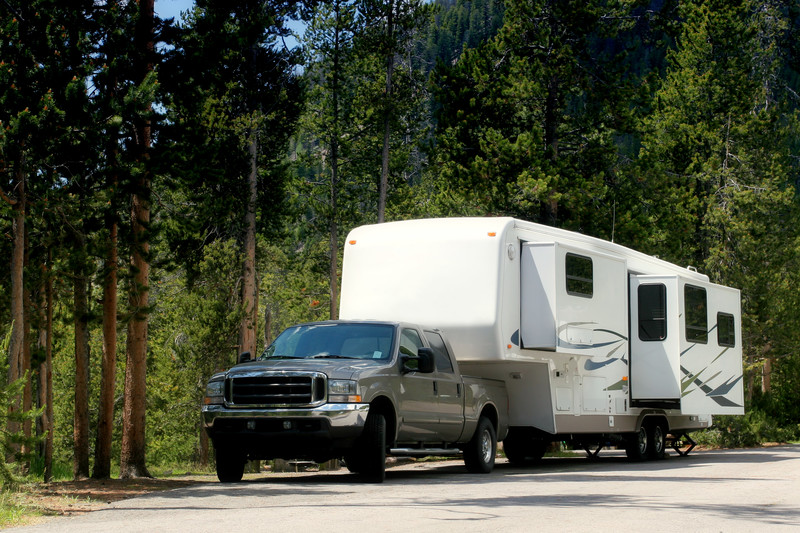
Although both types of RVs can serve as a home away from home, the biggest difference is simple: a 5th-wheel travel trailer is towed by a truck, while a motorhome drives itself.
This distinction influences nearly every aspect of ownership, from setup and driving to maintenance and financing.
What Is a Fifth Wheel Travel Trailer?
A 5th-wheel travel trailer, or 5th-wheel camper, is a towable RV that connects to a pickup truck using a specialized hitch system installed in the truck bed.
Unlike conventional travel trailers that connect to a rear receiver hitch, 5th wheels use a kingpin-and-puck system for the fifth-wheel hitch connection. This setup creates a more stable towing experience and generally reduces sway compared to traditional travel trailers.
Most 5th-wheel campers offer:
- Multiple slide-outs
- Large living rooms
- Residential-style kitchens
- Separate bedrooms
- Spacious restrooms
- Basement storage space
- Large holding tank capacities
Because part of the RV extends over the truck bed, fifth-wheels often provide more usable interior space than similarly priced motorhomes.
It is worth clarifying that, although they are similar, 5th-wheel travel trailers differ from gooseneck trailers (or gooseneck campers) in the type of hitch system used. Gooseneck trailers use a ball bitch system, not the puck.
What Is a Motorhome?
A motorhome is a self-contained recreational vehicle with its own engine and drivetrain.
Unlike towable RV trailers, motorhomes do not require a separate truck for transportation.
Everything is integrated into a single unit.
The most common motorhome categories include:
- Class A
- Class C
- Super C
Class A coaches are typically the largest and most luxurious options, while Class C and Super C models often offer a balance of comfort, drivability, and affordability.
Many motorhomes include:
- Full kitchens
- Bathrooms
- Sleeping quarters
- Generators
- Entertainment systems
- Storage compartments
- Self-contained utility systems
Because they can be driven directly to a campground, they appeal to RVers who prioritize convenience and simplicity.
Quick Comparison Table
| Feature | Fifth Wheel | Motorhome |
| Requires Truck | Yes | No |
| Built-In Engine | No | Yes |
| Easier Day Trips | ✓ | |
| Easier Travel Days | ✓ | |
| More Living Space Per Dollar | ✓ | |
| Residential Feel | ✓ | |
| Easier Setup at Stops | ✓ | |
| Engine Maintenance | No | Yes |
| Large Basement Storage | ✓ | ✓ |
| Full-Time Living Potential | ✓ | ✓ |
Budget and Cost of Ownership Comparison
For many buyers, the decision between a 5th wheel vs motorhome ultimately comes down to cost.
The purchase price is only one part of the equation. Fuel, insurance, maintenance, storage, and long-term ownership expenses should all be considered before making a final decision.
Purchase Price Differences
Generally speaking, 5th-wheel campers offer more living space and amenities for the money.
Entry-level 5th-wheel trailers can often be found at significantly lower price points than comparable motorhomes.
Motorhomes typically command higher prices because buyers are also purchasing:
- The living quarters
- The chassis
- The engine
- The drivetrain
- Additional vehicle systems
Class A motorhomes often represent the highest price category, while many Class C provide a more budget-friendly entry point into motorized RV ownership.
Insurance Costs
Insurance costs vary by state, driving history, RV value, and usage patterns.
Because motorhomes function as motor vehicles, they often require:
- Liability coverage
- Collision coverage
- Comprehensive coverage
Fifth wheel trailer owners generally insure the RV separately while relying on the truck’s liability coverage when towing.
As a result, 5th-wheel travel trailer insurance costs are frequently lower than those associated with large motorhomes.
Fuel Costs
RV gas mileage and fuel expenses will always be another major consideration.
- Class A motorhomes, especially larger gas-powered or diesel-powered coaches, can consume significant amounts of fuel during long trips.
- 5th-wheel trailer owners still incur fuel costs through their tow vehicle, but many modern diesel trucks provide surprisingly efficient towing performance.
Fuel economy should be evaluated based on how often you plan to travel and the distances you expect to cover each year.
Storage Costs
Storage requirements often differ between the two RV types.
- Motorhomes frequently require larger storage facilities due to their overall size and inability to separate the living unit from the vehicle.
- 5th-wheel trailer owners may have more flexibility because the RV and truck can be stored separately if desired.
Before purchasing either option, investigate storage availability and pricing in your area.
Maintenance and Repair Costs
This is where ownership costs can diverge significantly.
Motorhome owners must maintain:
- Engines
- Transmissions
- Braking systems
- Tires
- Generators
- HVAC systems
- Safety systems
Fifth wheel trailer owners avoid drivetrain maintenance because the truck handles propulsion duties.
However, they are still responsible for:
- Roof maintenance
- Slide-out maintenance
- Tires
- Suspension components
- Appliance repairs
- Seals and weatherproofing
Over time, motorhomes generally carry higher maintenance costs because of the additional vehicle systems involved.
Which Option Delivers More Value?
- For buyers focused on maximizing living space and amenities per dollar, 5th-wheel travel trailers often provide exceptional value.
- For buyers who prioritize convenience, integrated travel, and ease of use, motorhomes may justify their higher costs.
The better value ultimately depends on how you intend to use the RV.
Living Space and Amenities Comparison
One area where fifth wheel trailers and motorhomes frequently compete head-to-head is interior comfort.
Both can provide luxurious accommodations, but they often achieve that comfort in different ways.
Fifth-Wheel Floor Plans
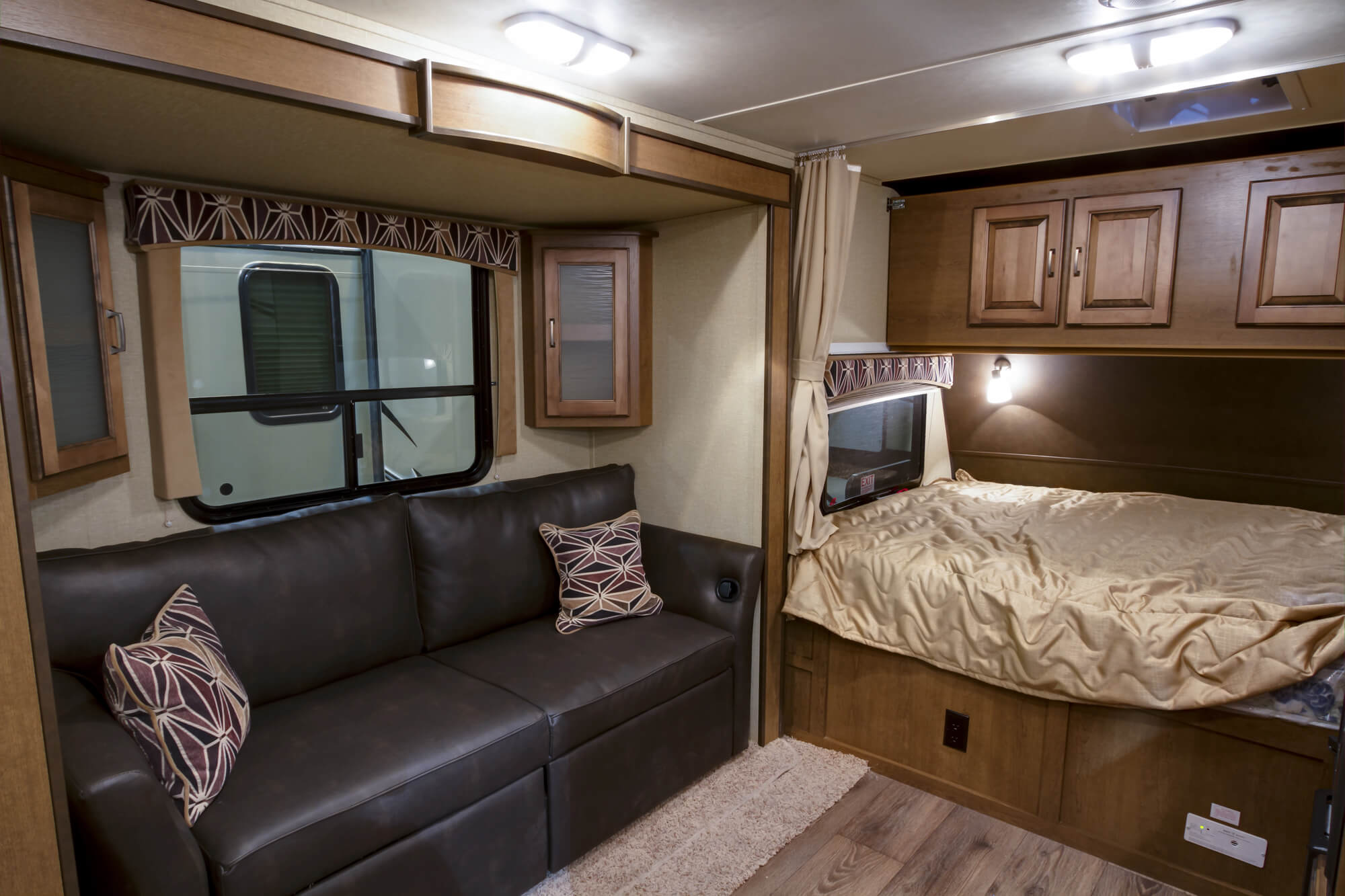
Fifth-wheel floor plans are designed to maximize usable living space.
Many models feature:
- Raised front bedrooms
- Multi-level layouts
- Large kitchens
- Residential-style furniture
- Separate entertainment areas
- Dedicated office spaces
Because there is no engine compartment consuming valuable space, manufacturers can devote more square footage to living areas.
Many full-time RV enthusiasts choose 5th wheels specifically for their spacious layouts.
Motorhome Floor Plans
The floor plans of a motorized RV will vary significantly by class.
Class A motorhomes often include:
- Large living rooms
- Luxury kitchens
- Multiple slide-outs
- Residential refrigerators
- Washer and dryer options
Class C and Super C models typically provide slightly less living space but offer excellent functionality and family-friendly designs.
Class B models will have even less area to work with and depend on creative space-saving solutions to offer basic amenities.
Nonetheless, the ability to access the kitchen, restroom, and living area while traveling is a major advantage unique to motorhomes.
Kitchen and Living Area Comparison
Both RV types can include impressive kitchens.
High-end models frequently offer:
- Residential refrigerators
- Large pantries
- Solid-surface countertops
- Dinettes
- Entertainment centers
- Premium seating
However, fifth wheels often provide larger kitchens for a comparable purchase price.
Bathrooms and Sleeping Arrangements
Many 5th-wheel campers feature large master suites and spacious restrooms that rival residential homes.
Motorhomes can also provide comfortable sleeping accommodations, but available space varies significantly depending on class and floor plan.
Families should carefully evaluate:
- Sleeping capacity
- Bathroom accessibility
- Privacy considerations
- Guest accommodations
before making a purchase decision.
Storage and Holding Tank Capacities
Storage is one of the most overlooked aspects of RV ownership.
- Fifth wheel trailers often excel in this area thanks to their expansive basement storage compartments.
- Motorhomes also provide significant storage options, particularly Class A models, but storage layouts vary considerably by manufacturer and model year.
Long-term travelers should pay particular attention to:
- Basement storage space
- Exterior storage compartments
- Closet capacity
- Holding tank capacities
These factors can dramatically affect day-to-day comfort during extended trips.
Slide-Outs and Expandable Space
Modern slide-outs have transformed RV design.
Both fifth wheels and motorhomes can include multiple slide-outs that dramatically increase interior living space when parked.
For many RVers, slide-outs are among the most important amenities available because they significantly improve comfort during longer stays.
Towing vs. Driving: Which Experience Is Better?
The biggest day-to-day difference between a fifth wheel and a motorhome is how each one moves, although both require practice, patience, and safety awareness.
What It’s Like Towing a Fifth Wheel
Fifth wheels generally tow more smoothly than many standard travel trailers because the hitching system places the connection point over the truck bed instead of behind the bumper.
Key towing considerations include:
- Truck payload capacity and towing capacity
- GVWR for both truck and vehicle, and total GCWR
- Fifth wheel hitch
- Puck system compatibility with the kingpin connection
- Landing gear operation
- Brake controller setup
Because of this design, 5th-wheels trailers often experience less sway than conventional RV trailers. However, they still require careful turning, braking, and route planning.
What It’s Like Driving a Motorhome
Driving a motorhome can feel more straightforward because there is no trailer behind you.
However, larger vehicles will always require confidence (and skill) behind the wheel.
Class A motorhomes can feel similar to buses, while Class C and Super C units often feel closer to large trucks.
Class B vehicles will feel closer to large vans.
Drivers should consider:
- Height clearance
- Turning radius
- Braking distance
- Fuel stops
- Parking limitations
- Campground access
Parking and Campground Setup
- Motorhomes often have the advantage when it comes to quick setup. Once parked, owners can level the unit, connect utilities, and begin using the living space.
- Fifth wheel camper owners must unhitch, lower the landing gear, level the trailer, and secure the truck separately. The process becomes easier with practice, but it adds steps.
Day Trips Once You’re Parked
This is where fifth wheels have a major advantage.
Once you unhook at the campground, your truck is available for errands, sightseeing, and exploring.
Motorhome owners who want separate transportation often need to flat-tow a car, use a dolly tow setup, bring bikes, or rely on rideshare services.
Without a secondary vehicle, even a quick trip into town may require packing up everything.
Which RV Is Best for Your Lifestyle?
The right choice depends less on the RV itself and more on how you plan to use it.
Best for Full-Time RV Living
Both types of RVs can work well for full-time RV living.
- Fifth wheels often provide more residential-style amenities, larger kitchens, and better living space for the money.
- Motorhomes may be better for RVers who travel frequently and want an easier driving and setup experience.
Best for Families
Families often prefer fifth wheels because of their larger floor plans, bunkhouse options, and storage capacity.
However, Class C motorhomes can also be excellent family RVs because they are easier to drive than Class A models while still offering sleeping space and self-contained convenience.
Best for Couples
Couples may enjoy either option.
- A fifth wheel is ideal for couples who want more room and plan to stay in one location longer.
- A motorhome may be better for couples who travel often, take long road trips, or prefer a quick campground setup.
Best for Weekend RV Camping
For weekend RV camping, a fifth wheel may make sense if you already own a capable truck. However, a motorhome can be more convenient for short trips because it reduces hitching and unhitching time.
Best for Long Cross-Country Trips
- Motorhomes often shine during long travel days because passengers can access the kitchen, restroom, and living space while on the road.
- Fifth wheels may be more comfortable once parked, especially for extended stays.
Best for Remote Work and Extended Travel
Remote workers often appreciate fifth wheels because of their larger living areas and dedicated office-style floor plans.
However, larger motorhomes can also provide excellent workspaces, generators, and self-contained systems for extended travel.
Best for Off-Road and Remote Destinations
Neither large fifth wheels nor large motorhomes are ideal for serious off-road travel.
However, a fifth wheel paired with the right truck may provide more flexibility in remote areas, especially when the RV remains parked, and the truck is used separately for exploring.
Financing a Fifth Wheel vs. a Motorhome
Financing should be part of the buying conversation from the beginning. Fifth wheels and motorhomes may both be RVs, but lenders often evaluate them differently because one is towable and the other is self-powered.
How Lenders View Fifth Wheels vs Motorhomes
A motorhome includes an engine, a drivetrain, a chassis, and an odometer. That means lenders may consider vehicle age, mileage, mechanical condition, and resale value when reviewing the loan.
A fifth wheel is a towable RV, so there is no engine or transmission risk. However, lenders may still consider the trailer’s age, condition, value, and whether the buyer has a suitable tow vehicle.
Typical Financing Considerations for Fifth Wheels
Fifth wheels often have lower purchase prices than comparable motorhomes, which can make monthly payments more manageable.
However, buyers should include the full ownership picture, including:
- Truck requirements
- Hitch installation
- Insurance
- Storage
- Maintenance
- Campground costs
If you already own a truck with the proper towing capacity, a 5th-wheel may offer strong value.
Typical Financing Considerations for Motorhomes
Motorhomes often involve larger loan amounts, especially for Class A and Super C models.
Because motorhomes are self-powered, lenders may evaluate:
- Mileage
- Model year
- Mechanical condition
- Collateral value
- Down payment
- Loan term
Motorhome financing may offer longer loan terms on higher-value units, but the total cost of ownership can also be higher due to maintenance, insurance, and fuel.
New RVs vs. Used RVs
Both fifth wheels and motorhomes can be purchased new or used.
- New RVs may offer the latest floor plans, manufacturer amenities, technology, and warranty coverage.
- Used RVs may offer lower purchase prices, but buyers should carefully inspect condition, maintenance records, roof seals, tires, appliances, slide-outs, and generators.
Questions to Ask Before Applying for RV Financing
Before choosing a fifth wheel or motorhome, ask:
- Is this RV being financed as a towable RV or motorhome?
- What loan terms are available?
- How does the RV’s age affect approval?
- How much should I budget for insurance and storage?
- Does the lender allow the intended use?
- How would a larger down payment affect the loan?
A specialty RV lender such as Southeast Financial can help buyers compare financing options for fifth wheels, motorhomes, and other RV trailers.
Overview of Pros and Cons of Fifth Wheel Campers
Advantages of Fifth Wheels
Fifth wheel travel trailers offer several major advantages:
- More living space for the purchase price
- Residential-style floor plans
- Large kitchens and restrooms
- Excellent basement storage space
- Strong option for full-time RV living
- Ability to use the truck separately after setup
- No engine or transmission maintenance on the RV itself
Potential Drawbacks of Fifth Wheels
The biggest drawbacks include:
- Requires a capable truck
- Requires a fifth wheel hitch or puck system
- More setup steps at the campground
- Towing takes practice
- Height and weight limits require careful planning
- Truck and trailer may need to be stored separately
For buyers who do not already own a proper tow vehicle, the total purchase cost can rise quickly.
Pros and Cons of Motorhomes
Advantages of Motorhomes
Motorhomes provide strong benefits for many RVers:
- Self-contained travel experience
- Easier setup at overnight stops
- Access to the restroom, kitchen, and living space while traveling
- Strong choice for long road trips
- No separate tow vehicle required
- Class A, Class C, and Super C options available
- Convenient for frequent destination changes
Potential Drawbacks of Motorhomes
Potential disadvantages include:
- Higher purchase price
- Higher maintenance costs
- Engine and drivetrain repairs
- More expensive insurance in many cases
- May require a flat-tow or dolly tow vehicle for day trips
- Larger models can be difficult to maneuver
Motorhomes are often best for RVers who value convenience and travel-day comfort enough to justify the added cost.

Frequently Asked Questions About Fifth Wheels and Motorhomes
Is a fifth wheel cheaper than a motorhome?
In many cases, yes. Fifth wheels often cost less than comparable motorhomes because they do not include an engine, drivetrain, or cockpit — meaning you are spending your budget on living space and amenities like kitchen islands and residential-style features rather than two engines worth of mechanical components. However, buyers who need to purchase a used tow vehicle or upgrade their current daily driver truck should include that cost in the full comparison before deciding which option makes the most sense for their RV life and budget.
Do I need a special truck for a fifth wheel?
You need a truck with enough towing capacity, payload capacity, and the right hitching system to safely pull your fifth wheel — and the rear axle rating of the tow vehicle is one of the most important specifications to verify before committing to a specific fifth wheel model. Many larger fifth wheels require heavy-duty trucks, and buyers who plan to use their daily driver as a used tow vehicle should confirm that the truck’s rear axle, payload rating, and fifth wheel hitch capacity are all sufficient for the unit they want to pull.
Which RV has more storage space?
Fifth wheels often provide excellent basement storage space and large interior storage areas — with enough room for full timers to store everything from outdoor gear and tools to golf carts and seasonal items in the basement compartments. Class A motorhomes can also offer significant storage, but capacity depends on the model and floor plan. For buyers who want to accommodate a comfortable and organized RV life with kitchen islands, large living areas, and the kind of residential storage that makes long-term travel practical, fifth wheels tend to deliver more usable space for the money.
Is a Class A motorhome better than a fifth wheel?
Not always — and the right answer depends on how you plan to spend your time on the road and what you want your RV life to look like day to day. A Class A motorhome, particularly a diesel pusher, may be the better idea for frequent travel and convenience — offering a self-contained unit where you stay inside and ride in comfort without the need to pull a separate tow vehicle. A fifth wheel may be better for buyers who want more living space, kitchen islands, residential-style comfort, and the flexibility to unhitch the tow vehicle and use it as a daily driver for errands and exploration once you arrive at the campground.
Are fifth wheels safer to tow?
Fifth wheels are generally considered more stable than many standard travel trailers because the connection point sits over the truck bed above the rear axle — providing a more controlled and predictable ride than a bumper pull setup, particularly on highway driving and through rest area maneuvers. However, safe towing still depends on proper equipment, weight ratings, hitch setup, rear axle capacity of the tow vehicle, and driving habits. Full timers and experienced RV life enthusiasts consistently report that the fifth wheel hitch design produces a more confident and stable ride than comparable travel trailers at highway speeds and in parking lot situations where precision matters.
Is financing easier for a fifth wheel or motorhome?
It depends on the buyer, RV value, credit history, down payment, age of the unit, and loan structure. Fifth wheels may have lower loan amounts — particularly if the buyer already owns a suitable daily driver or used tow vehicle — while motorhomes, including diesel pusher models, may qualify for different terms because they are motorized RVs. Full timers and buyers who plan to accommodate an extended RV life on the road should discuss their specific situation with a lender who understands the difference between financing a pull unit and financing a self-contained motorhome.
Can I finance a used RV?
Yes, many buyers finance used fifth wheels and used motorhomes. Lender requirements may vary based on model year, condition, mileage, value, and intended use — and buyers who want to flat tow a small vehicle behind a used motorhome or pull a golf cart behind a fifth wheel should discuss how those additional units affect the overall financing picture. Whether you are financing a diesel pusher for full time RV life or a fifth wheel that will accommodate a family for weekend adventures, Southeast Financial can help you understand your options before you decide.
Choosing the Right RV for Your Adventures
There is no single winner in the fifth wheel vs motorhomes debate — and the right choice depends on how you want to spend your time, what you want to pull or ride in, how much living space you need to accommodate your lifestyle, and how you plan to balance convenience with the other things that matter most about your RV life.
A fifth wheel may be the better choice if you want more living space, kitchen islands, strong basement storage, enough room for full timers to live comfortably year-round, and the flexibility to unhitch and use your daily driver or used tow vehicle separately after arriving at the campground. The ability to flat tow a small vehicle or bring a golf cart along for campground exploration adds further appeal for buyers who want that flexibility as part of their RV life.
A motorhome may be the better choice if you want a self-contained travel experience where you stay inside and ride in comfort — with a diesel pusher providing the smoothest ride and the most power for long driving days, rest area stops, and navigating parking lot situations in larger campgrounds and travel destinations. The convenience of not needing a separate tow vehicle as a daily driver is a genuine advantage for buyers who spend extended time on the road and want to simplify their setup.
Before making a purchase, compare the full cost of ownership — not just the monthly payment or purchase price. Consider insurance, storage, fuel, the cost of a used tow vehicle or daily driver upgrade if needed, towing equipment including rear axle upgrades, maintenance, warranties, and how often you plan to travel and what your RV life will actually look like in practice. Full timers who plan to spend the majority of their life on the road will have very different priorities than weekend adventurers who pull their unit a few times a year — and the financing structure that makes the most sense will reflect those differences.
Southeast Financial helps RV buyers explore financing options for fifth wheels, motorhomes, travel trailers, and other recreational vehicles. Contact Southeast Financial today to compare RV loan options and find financing that fits your lifestyle, budget, and next adventure.

Rate does not apply to refinancing.
Please call for a refi quote: 866.900.8949