Personal Watercraft (PWC) have come a long way since the early days of Jet Skis and Waverunners. Whether you’re chasing speed, carving through waves, or just cruising the lake with friends, today’s riders now mostly face one big question: stand-up or sit-down Jet Skis?
Both styles deliver an adrenaline-fueled experience on the water, but they serve different types of riders, performance goals, and riding conditions. Stand-up Jet Skis (also known as stand-ups) offer agility, finesse, and control for those who want tricks, sharp maneuverability, and a full-body workout. Sit-down Jet Skis, on the other hand, are engineered for comfort, speed, and family-friendly features, making them ideal for towing equipment like water skis or enjoying long-distance rides across the water.
From Kawasaki’s legendary SX-R to Yamaha’s Super Jet and even mod-heavy models like the Krash Reaper or Footrocket, the market is filled with options that vary in hull design, engine power, storage space, and overall maintenance requirements. Any loyal user of everything from the classic Kawasaki 550 or the custom Krash Reapers should have the basics about performance capabilities, pros, and cons of each type practically memorized.
In this guide, we’ll compare stand-up vs sit-down Jet Skis in depth, breaking down their unique benefits, engine types (2-stroke vs 4-stroke), speed profiles, maintenance needs, cost considerations, and tips on how to decide which model best suits your style, terrain, and budget.
What’s the Difference Between Stand-Up and Sit-Down Jet Skis?
While both are classified as Personal Watercraft, the Stand Up Sit Down Difference goes beyond the riding position. Everything from hull design and engine type to maneuverability, control, and even insurance costs will vary between the two types.
Design & Build Comparison
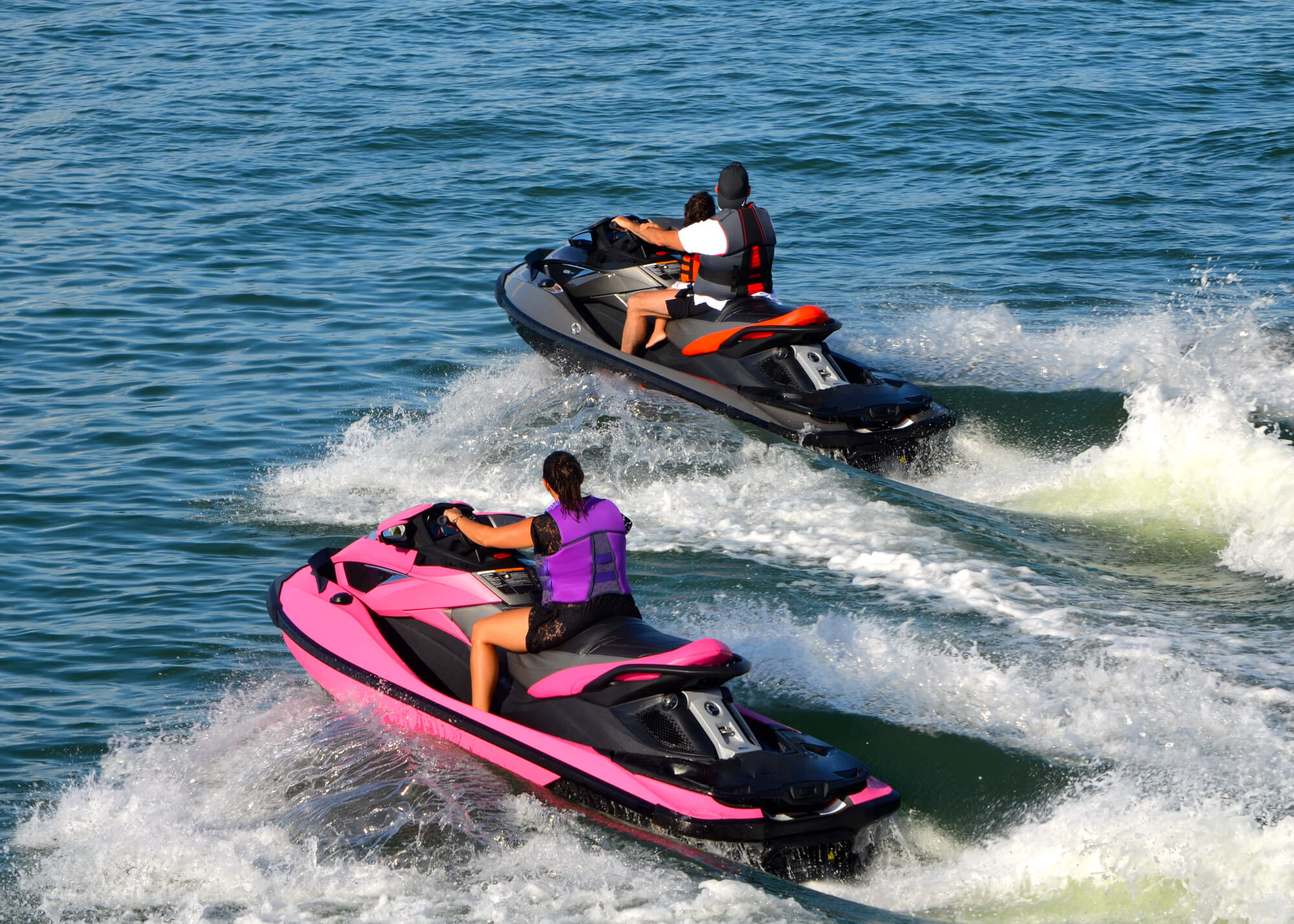
- Sit-down Jet Skis are larger in size, with wide hulls and seating designed to accommodate one to three riders. These PWCs typically come with extended platforms for towing water ski equipment or wakeboarders and built-in storage compartments for gear and accessories. Models like the Sea-Doo Spark, Yamaha VX Cruiser, or the Kawasaki Ultra LX cater to comfort, stability, and versatility.
- Stand-up Jet Skis, such as the Kawasaki SX-R and Yamaha Super Jet, are leaner, lighter, and built for solo use. They lack seating but gain in precision and balance, allowing skilled riders to pull off tricks, spins, and wave jumps with finesse. The hull is typically narrower, aiding agility, and the handle pole (which can be prone to wear or cracking) is a central component of balance and control. These are ideal for riders looking for raw performance, rapid acceleration, and a true adrenaline rush.
Riding Position & Control
- Stand-ups demand a more athletic approach. Riders balance on their feet, often using their whole body to shift weight, adjust angles, and maintain control—especially on waves. This requires a strong core, good reflexes, and often, dedicated training. The result? A high-reward, high-skill riding style that delivers unmatched maneuverability.
- Sit-downs, by contrast, offer a relaxed position. You’re seated like on a motorcycle, with handlebars for steering and footwells for stability. These PWCs are easier for beginners, families, or riders who value cruising comfort over agility. And because of their design, sit-down models provide more powerful engines, often 4-stroke, capable of hitting higher top speeds and offering smoother rides on choppy water.
Engine, Hull, and Performance Capabilities
- Most stand-up Jet Skis feature 2-stroke engines or compact 4-stroke variants. They’re responsive and quick, giving riders the ability to perform quick direction changes, jumps, and freestyle maneuvers. Hulls on these machines are often V-shaped, aiding performance on turns but requiring more balance.
- Sit-down PWCs focus on speed and endurance thanks to their larger 4-stroke engines (often ranging from 110 to over 300 horsepower). Their hulls prioritize stability over agility, allowing them to cut through waves with less rider effort. For example, a Yamaha FX Cruiser or Sea-Doo GTX can offer a luxurious ride without sacrificing thrilling acceleration.
Benefits of Stand-Up Jet Skis
For riders craving power-to-weight thrills, explosive agility, and a personal connection to the water, stand-up Jet Skis deliver a uniquely visceral experience. Often compared to motorcycles on water, these machines favor finesse over comfort and are built for performance enthusiasts who want total control.
Performance, Agility, and Tricks
Stand-ups are engineered for maximum maneuverability and agility, making them the go-to choice for trick riding and competitive Jet skiing.
- Performance: The lightweight hull, shorter length, and compact 2-stroke engine or high-revving 4-stroke motor give them lightning-fast acceleration and tight turning radii.
- Agility: Whether it’s carving waves, performing 360 spins, or launching off wakes, models like the Yamaha Superjet, Kawasaki SX-R, and even the Krash Reaper are made for riders who thrive on dynamic motion and quick directional changes. The handle pole allows for a wide range of motion control, enabling stunts that sit-down PWCs simply can’t execute.
- Tricky: These PWCs are ideal for riding in surf zones, race circuits, or freestyle parks, where performance capabilities matter more than cruising comfort. Every movement of your body affects the ski’s direction, creating a deeply immersive, full-body adrenaline rush.
Compact Size and Easier Storage
With no seating platform or bulky frame, stand-up Jet Skis are smaller and lighter than their sit-down counterparts. That makes them:
- Easier to tow (even with a pickup truck or small trailer)
- Easier to launch and retrieve solo
- A better fit for compact storage spaces like garages
They’re also simpler to store indoors during winter months or for seasonal riders with limited space. The lighter weight reduces trailer stress and helps avoid overloading when towing multiple PWCs.
Ideal for Riders Who Want a Challenge
Stand-ups aren’t beginner-friendly—but that’s the point. They reward training and time spent mastering the craft. Riders often experience a stronger sense of control, balance, and flow once they develop skill on a stand-up.
This style of Jet skiing appeals to thrill seekers, athletes, and those who want to push their limits. It’s more physically demanding, yes, but also more rewarding. Many longtime water enthusiasts describe riding stand-up Jet Skis as “surfing meets motocross”—fast-paced, technical, and endlessly exciting.
Lower Initial Cost and Modifiability
In many cases, stand-up Jet Skis come with a lower initial purchase price than sit-down models. Brands like Krash and Kawasaki offer models that are highly aftermarket/modifiable, allowing riders to rebuild engines, swap out cracked handle poles, tweak motor mounts, or even redesign the nose cone.
This has led to a passionate customization community in Jet skiing, especially for racing and freestyle riders. It’s not uncommon to see stand-ups with extensive performance modifications, tailored for top-tier competitions or local stunt events.
Benefits of Sit-Down Jet Skis
If you’re after versatility, high-speed cruising, or family-friendly comfort, sit-down Jet Skis are the all-around PWC designed to do it all. From towing wakeboarders to touring large lakes, these models offer a Jet skiing experience that’s stable, powerful, and easy to enjoy, especially for newcomers.
Comfort, Stability, and Speed
- Comfy and Stable Riding: Sit-down Jet Skis are built with comfort in mind. They feature padded seating for one to three riders, ergonomic handlebars, and hulls engineered for stability even at high speeds or in choppy water. This makes them perfect for long-distance rides, high-speed sprints, or exploring wide-open areas like lakes or oceans.
- Still, Tears Through the Water: Top models like the Yamaha FX HO, Sea-Doo GTX, or Kawasaki Ultra 310LX boast 4-stroke engines that deliver up to 300+ horsepower, with the torque and acceleration to rival some speedboats. Their performance capabilities are exceptional, especially when paired with advanced hull designs that maintain balance during aggressive turns or wave jumping.
These PWCs are less physically demanding than stand-up Jet Skis, offering a smoother, but still powerful, ride that appeals to recreational riders, families, and anyone who values ease over finesse.
Family-Friendly Features and Versatility
Beyond solo thrills, sit-down Jet Skis offer features that make them ideal for family fun:
- Towing capabilities for water skiing or inflatables
- Large rear platforms for mounting towing equipment
- Built-in storage compartments for coolers, dry bags, or gear
- Bluetooth sound systems, GPS navigation, and adjustable trim for performance tuning
Models like the Sea-Doo Spark Trixx or Yamaha VX Cruiser HO blend affordability with high-end features, providing flexibility for riders of all skill levels. The ability to carry multiple people opens up a wider range of use cases, from leisurely rides to towing sports and weekend outings.
Easier for Beginners to Learn
For riders just starting out, sit-down Jet Skis are significantly easier to handle. The low center of gravity, responsive but forgiving controls, and automatic learning modes (offered by some manufacturers) help reduce the learning curve.
Unlike stand-ups, which require intense balance and strength, sit-downs allow you to focus on basic maneuverability and throttle control without worrying about staying upright. That’s especially helpful for younger riders or those who want a fun, low-friction introduction to the world of Jet skiing.
Built for All Conditions
Sit-down Jet Skis are more versatile across different environments: rivers, lakes, bays, and even the open ocean. Their wider hull and longer frame allow them to glide over waves and maintain control at high speeds. Whether you’re navigating coastal chop or calm freshwater conditions, sit-downs are reliable and stable.
Plus, models like the Ski-Doo Explorer Pro or Kawasaki STX 160 offer specialized add-ons for fishing, touring, and extended exploration. These features transform your PWC into a multipurpose watercraft, extending the value of your investment.
Factors to Consider When Choosing: Stand-Up vs Sit-Down
Choosing between a stand-up and a sit-down Jet Ski comes down to more than just preference. You’ll have to think hard about your goals, the environment, your skill level, and even long-term maintenance and storage needs. Below are key variables to evaluate before committing to a model.
Your Experience Level
- Beginner: If you’re a beginner or only plan to ride occasionally, a sit-down Jet Ski is often the safer bet. Its stability, forgiving handling, and relaxed riding posture make it more accessible for riders still learning maneuverability and throttle control.
- Experienced: However, if you’re an experienced rider or looking to elevate your Jet skiing skills, a stand-up Jet Ski will challenge and reward you. With a steeper learning curve, these machines offer unmatched control and high-intensity performance once mastered.
Training can play a key role here. Many riders start on sit-down models to get comfortable before advancing to stand-ups for added freedom and agility.
Intended Use and Riding Style
Ask yourself: What’s your primary reason for owning a Personal Watercraft?
- For towing water skis, wakeboards, or inflatable tubes—go with a sit-down.
- Want to do tricks, jumps, and sharp cornering on surf or flatwater? The stand-up is designed exactly for that.
- Touring large lakes or scenic waterways with gear or passengers? Sit-downs offer storage, comfort, and endurance.
- Looking for competition-ready responsiveness, or freestyle stunts? Choose a stand-up like the Super Jet, SX-R, or Krash FootRocket Pro—all optimized for high-performance riders.
Where You’ll Be Riding (Water Conditions)
Location matters.
- Sit-downs are better suited for large lakes, rivers, and open water, where their weight and hull design handle waves better. Their 4-stroke engines offer endurance, power, and smoother riding in rougher water.
- Stand-ups shine in shallow surf zones, smooth inland lakes, or controlled courses. Their compact size and 2-stroke engines (though many now come in 4-stroke versions) allow for quick reactions and explosive acceleration over shorter distances.
For example:
- Coastal riding or ocean excursions? Lean sit-down.
- Trick parks or competitive freestyle? Go with a stand-up.
Storage and Transport Considerations
If space is a concern, stand-ups win. Their smaller frame:
- Fits easily in compact storage spaces
- Requires less room on trailers or in garages
- Weighs less, which means easier solo handling and less impact on pickup truck towing capacity
Sit-down Jet Skis, while bulkier, often require reinforced motor mounts, a larger trailer, and consideration for extended storage space, especially when adding gear or accessories.
Customization and Aftermarket Potential
Both platforms have aftermarket/modifiable options, but:
- Stand-ups are especially loved by tinkerers and DIY mechanics. You’ll find extensive communities rebuilding engines, swapping handle poles, adjusting nose cones, or installing custom motor mounts.
- Sit-downs also offer upgrades—audio systems, navigation tools, or trim kits—but tend to be more “ready to ride” out of the box with less emphasis on modification for performance.
Environmental Impact and Pollution
Today’s 4-stroke engines in both sit-down and stand-up models emit far less pollution than older 2-stroke designs. However, many legacy stand-up Jet Skis still use 2-strokes, which are less efficient and environmentally friendly. If you’re riding in regulated lakes or eco-sensitive areas with strict boating laws, this could impact which PWC is permitted.

Cost Comparison & Ownership Considerations
Owning any aquatic vehicles — Jet ski or otherwise– is more than a one-time purchase.
From initial cost and insurance to maintenance, storage, and extended warranties, knowing the full scope of ownership helps avoid surprises and guides smarter financial decisions.
Initial Purchase Price
- Stand-up Jet Skis tend to be more affordable upfront. Entry-level models like the Yamaha Superjet or Kawasaki SX-R start between $10,000 and $13,000, depending on the engine type and features. Performance-focused models such as the Krash Footrocket Pro may push that higher due to their freestyle customization.
- Sit-down Jet Skis, especially performance or luxury editions, can range widely—from about $9,000 for a Sea-Doo Spark to over $20,000 for a Kawasaki Ultra 310LX or Yamaha FX SVHO Cruiser. Added features like Bluetooth audio, GPS, or intelligent braking systems increase the base cost but may offer greater convenience for families and long-distance riders.
Insurance
Insurance costs depend heavily on:
- Engine size (i.e., horsepower)
- Year/make/model
- Intended use (leisure vs racing)
- Rider age and experience
Sit-down PWCs, with higher engine displacement, often carry higher premiums. Their capacity to carry passengers and tow also increases liability risk. Stand-ups, while typically cheaper to insure, may be excluded from some policies if classified as high-risk for racing or freestyle use.
Southeast Financial partners with trusted insurance providers and can help secure coverage for both new and used personal watercraft, whether stand-ups or sit-downs.
Maintenance and Rebuilding Costs
Maintenance varies by model and engine type:
- 2-stroke engines (common in older stand-ups) require frequent tuning, oil mixing, and are more prone to breakdowns
- 4-stroke engines (standard in modern sit-downs and many stand-ups) are cleaner, more efficient, and need less frequent attention
Stand-up Jet Skis are easier and cheaper to service for DIY users. Rebuilding a cracked handle pole, swapping out motor mounts, or cleaning fuel lines can be done at home with basic tools and parts from suppliers.
Sit-down PWCs often require dealer servicing for complex components such as:
- Intake grate flushing
- Cooling systems
- Integrated digital modules
Routine care like flushing after saltwater use, lubricating nose cone areas, checking hull integrity, and winterizing are essential regardless of platform.
Extended Warranties
Extended warranties offer peace of mind, particularly on high-horsepower sit-down models. These can typically cover repairs on:
- Engine block and electrical systems
- Jet pump assembly
- Steering and fuel injection
- Wear-and-tear components
Southeast Financial offers extended warranty programs that include both new and used Jet Skis.
Storage and Seasonal Costs
Storage space and environment can drive long-term costs:
- Stand-ups can often be stored in residential garages or sheds
- Sit-downs, due to size and weight, may require marina storage or large trailers
Off-season storage, trailer rental, shrink-wrapping, and indoor options all add up. For winter climates, indoor heated storage preserves engine performance and reduces spring maintenance issues.
Maintenance Requirements for Both PWC Types
Regardless of whether you ride a stand-up Jet Ski or a sit-down model, routine maintenance is essential for safety, longevity, and sustained performance. While each platform has distinct requirements, both demand consistent attention, above all if used frequently or in saltwater conditions.
Seasonal Maintenance Essentials
Winterizing is critical for riders in colder climates. Before storing for the off-season:
- Flush the engine with freshwater (especially after saltwater use)
- Drain any remaining water from the cooling system
- Stabilize fuel with additives
- Remove the battery and keep it on a trickle charger
- Use marine-grade fogging oil to protect internal parts
Sit-down Jet Skis, with their larger, more complex 4-stroke engines, often require more intensive winterization due to integrated electrical components and larger fuel systems. Some high-end models also feature ride plate cooling or digital modules that should be checked.
Stand-ups, being more compact and mechanically minimal, are easier to winterize, with the older 2-stroke versions more so.
Engine and Hull Care
For both types of personal watercraft:
- Change oil (4-strokes only) every 50 hours or annually
- Check and clean the jet pump and wear ring
- Inspect motor mounts for wear or corrosion
- Lubricate all moving parts (steering, handlebars, throttle, etc.)
- Examine the hull for cracks, chips, or deep scratches
Stand-up PWCs, with frequent wave jumping and trick riding, are more susceptible to minor structural damage—particularly in the handle pole and nose cone areas. Replacing or rebuilding these components is common in high-use scenarios.
Sit-down Jet Skis, especially heavier models used for towing or riding with passengers, face wear in the impeller, driveshaft, and cooling intake grate. Sand or debris can clog these systems, reducing performance and increasing repair risk.
Routine Inspections and Accessories
Before every ride:
- Check for oil/fuel leaks
- Inspect the engine compartment for moisture
- Verify battery voltage
- Test throttle and steering control
Add-ons like aftermarket sponsons, ride plates, or trim tabs on sit-downs should be inspected for tightness and wear. For stand-ups, frequently check the handle pole pivot, throttle cable tension, and motor mount integrity after performing stunts or hard landings.
Storage and Cleaning
Proper cleaning extends the life of your Jet Ski:
- Rinse thoroughly after every ride—particularly in saltwater
- Dry with a chamois to prevent hull spots
- Use PWC-specific cleaner for seats, grips, and paint
- Cover your watercraft with a breathable, UV-resistant cover
Indoor storage in a garage or shed is ideal for stand-ups, while sit-downs may require outdoor, covered storage or space at a marina or offsite facility.
Southeast Financial’s Role in Your PWC Purchase
Buying a Jet Ski—whether a performance-tuned stand-up or a family-ready sit-down—is an investment in adventure. At Southeast Financial, we specialize in making that investment more accessible, more affordable, and more protected through tailored financing and protection services designed specifically for personal watercraft owners.
Financing Options for Jet Skis
We offer competitive loan programs for both new and used Jet Skis. Our financing options are ideal for:
- Riders with strong credit or even rebuilding credit
- First-time buyers or experienced owners
- Dealers or private-party transactions
With same-day credit decisions, flexible loan terms, and no early payoff penalties, Southeast Financial provides a seamless path to ownership, whether you’re shopping for a trick-ready Super Jet or a luxury Waverunner with all the upgrades.
Extended Warranty
High-performance PWCs demand high-quality protection. We offer extended warranty plans that cover your engine, jet pump, electrical, and more, reducing the cost of future repairs.
This is especially important for owners of newer 4-stroke models, which often have higher repair costs and complex tech systems.
Nationwide Reach, Local Service
Wherever you’re located, Southeast Financial can support your PWC purchase:
- Licensed to serve in all 50 states
- Online application process—no dealership visit required
- Partnered with banks that specialize in recreational financing
It doesn’t matter if you’re riding inland lakes in Tennessee, surfing Florida’s coastal waters, or exploring mountain reservoirs out west; we’re here to help power your Jet Ski dreams.
Why Riders Choose Southeast Financial
- We understand the PWC market.
- We don’t shy away from lower credit scores: our team works hard to find approval paths for all types of riders
- We offer more than just financing; we deliver long-term value, peace of mind, and financial flexibility
Final Verdict – Which Jet Ski Is Right for You?
When it comes to choosing between stand-up and sit-down Jet Skis, the decision ultimately depends on your riding style, goals, and budget. Both platforms offer unique thrills—but they cater to different types of riders.
| Feature | Stand-Up Jet Skis | Sit-Down Jet Skis |
| Ideal For | Freestyle tricks, wave jumping, solo riding | Touring, towing, family recreation |
| Skill Level | Advanced to expert | Beginner to experienced |
| Engine Type | 2-stroke or compact 4-stroke | Larger 4-stroke engines |
| Speed & Agility | Quick acceleration, agile | Higher top speed, stable |
| Storage Capacity | Minimal | Moderate to high |
| Comfort | Athletic, physically demanding | Seated, comfortable ride |
| Maintenance | DIY-friendly, fewer systems | More complex, dealer-recommended service |
| Customization | High (aftermarket-friendly) | Moderate |
| Cost | Lower starting price | Wider price range, higher premium options |
| Towing Capability | Not designed for towing | Built-in tow hooks and platforms |
In either case, Southeast Financial can help you finance the right PWC and protect it with extended coverage so that you can ride harder, longer, and smarter.
Frequently Asked Questions (FAQ)
Can I tow a tube with a stand-up Jet Ski?
No. A stand up jet ski is not designed for towing due to its smaller size, lighter weight, and hull design. Unlike sit down models, which offer more storage space and stability, stand up models lack the power and control needed for pulling additional weight. If your intended use includes towing, a sit down jet ski is the better option.
Are stand-up Jet Skis harder to ride?
Yes. Riding a stand up jet ski requires balance, agility, and strength, much like operating a dirt bike on the water. Many riders choose stand up models for performing tricks, jumping waves, or seeking an adrenaline fueled experience. In contrast, sit down jet skis provide a more comfortable riding experience, longer rides, and greater stability—making them ideal for beginners, families, or riders who prefer a relaxed cruising style. The right choice depends on your skill level, intended use, and personal preference.
How long do PWCs typically last?
With proper maintenance, a personal watercraft such as a sit down or stand up jet ski can last 200–300 hours or more. That usually translates to 7–10 years of water adventures for most riders. Stand up models often require more maintenance due to their design and performance focus, while sit down models may need less maintenance if used at lower speeds for smooth cruising. Your riding style, storage space, and how well you maintain your ski will affect its overall lifespan.
Can Southeast Financial finance used Jet Skis or private-party sales?
Absolutely. Southeast Financial can finance both new and used personal watercraft, whether you’re buying from a dealer or through a private-party sale. Many riders look at sit down jet skis for their stability, comfort, and features, while others seek stand up models for the thrill and sport performance. With financing, you can choose the model that best fits your budget considerations, riding experience, and preferred water adventures.

Rate does not apply to refinancing.
Please call for a refi quote: 866.900.8949